California Winter Storm Preparation - How to Get Your Fence, Deck, and Gate Rain-Ready
California Winter Storm Preparation: How to Get Your Fence, Deck, and Gate Rain-Ready
California winter weather can bring heavy rain, strong winds, saturated soil, falling branches, and localized flooding. For homeowners, those conditions can put more than the house to the test. Fences, gates, decks, retaining walls, arbors, and trellises all need a little attention before the first major storm arrives.
NOAA’s Climate Prediction Center reports that El Niño has continued to strengthen and that a strong-to-very-strong event is likely through January–March 2027, with a greater than 83% chance. A major El Niño can increase the likelihood of impacts consistent with the pattern, but it does not guarantee the timing or severity of storms in the Bay Area—or at any individual property.
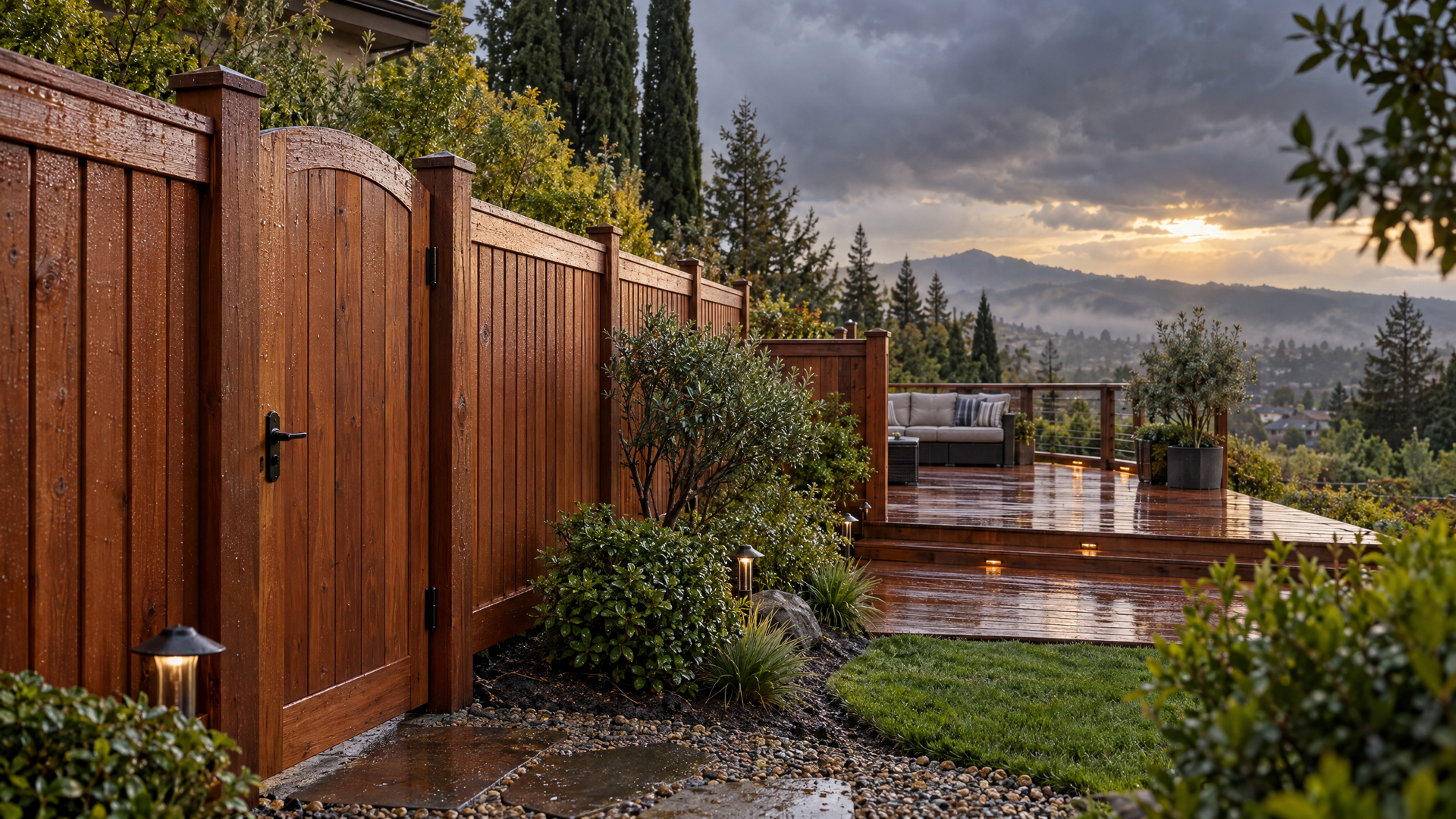
The best time to prepare is on a dry day, before an advisory is issued. A careful walk-around can help you catch loose hardware, poor drainage, or aging wood before rain and wind turn a small issue into a larger repair.
This checklist can help you prepare outdoor structures for normal seasonal weather, but it cannot make a property floodproof or eliminate storm risk. If local officials issue an evacuation order or other emergency guidance, follow it.
Start With a Walk-Around of Your Yard
Begin at one end of the property and inspect the full fence line, gates, deck, and any other exterior wood structures. Look for changes that may have developed since last winter: a gate that drags, a post that has started to lean, a deck board that feels soft, or soil that is collecting water near the base of a fence.
Pay close attention to:
- Leaning, loose, split, or visibly rotted fence posts
- Fence panels that sway, separate, or have loose rails or pickets
- Gate latches, hinges, drop rods, and self-closing hardware that no longer operate smoothly
- Deck boards, stairs, railings, and handrails that feel loose or show signs of wear
- Standing water, washed-out soil, or heavy mulch collecting along a fence or deck edge
- Cracks, movement, or drainage issues around retaining walls
- Loose lattice, shade material, décor, planters, or furniture near fences and decks
- Dead, damaged, or overhanging branches near outdoor structures
Take photos of anything that concerns you. Clear documentation can help you compare conditions after a storm and gives a fencing or deck professional a useful starting point.
1. Check Fence Posts and Panels Before the Ground Gets Saturated
A fence is only as stable as its posts. Rain-soaked soil can reveal problems that were easy to miss during dry weather, especially around older wood posts or areas where water tends to collect.
Walk along both sides of the fence, if accessible. Look for posts that lean, move when lightly pressed, or show splitting and decay near ground level. Check rails and pickets for loose fasteners, gaps, and boards that have warped enough to pull away from the frame.
Do not try to brace a visibly unstable fence during high winds or an active storm. If a section is leaning toward a walkway, driveway, neighboring property, or play area, keep people and pets clear and arrange a professional evaluation as soon as conditions are safe.
2. Make Sure Water Can Move Away From the Fence and Deck
Good drainage protects more than a home’s foundation. It also helps limit the prolonged moisture exposure that can affect fence posts, deck framing, stairs, and retaining walls.
Before winter, remove leaves, soil buildup, and yard debris that trap water along the fence line or under the deck. Check that sprinklers are not aimed at wood structures and that downspouts do not empty directly beside a post, gate, deck stair, or retaining wall. If a low spot repeatedly holds water, that is worth addressing before the next heavy rain.
California emergency guidance also recommends clearing gutters and downspouts, identifying drainage concerns, and securing property before storm conditions arrive. A clear path for roof runoff can help keep water from concentrating in the yard where it can undermine outdoor structures.
3. Test Every Gate and Its Hardware
Gates are often the first part of a fence system to show stress. Changes in soil moisture, shifting posts, and swelling wood can make a gate sag, scrape, or fail to latch.
Open, close, and latch each side gate, driveway gate, and access gate. It should move smoothly, align with the latch, and close without force. Check hinges, screws, bolts, handles, drop rods, and catches for rust, looseness, or damage. If you have an automated gate, confirm that it operates normally and follow the manufacturer’s maintenance guidance.
Avoid forcing a gate that sticks or has shifted out of alignment. The problem may be simple hardware adjustment, but it can also point to post movement or a failing frame. Address it before strong wind makes the gate harder to secure.
4. Inspect Deck Boards, Stairs, Railings, and Connections
A deck is an outdoor living space, but it is also a structural system. Winter is a good reason to look closely at the surfaces you use every day.
Walk the deck slowly and note any boards that feel springy, soft, cracked, or loose. Check stair treads, railing posts, handrails, and balusters by looking for movement or missing fasteners. Look beneath the deck, where accessible and safe, for standing water, damaged framing, loose connectors, or deteriorated wood near the ground.
For redwood decks, routine cleaning and appropriate finishing can help preserve the wood’s appearance and weather resistance. Composite decking also benefits from seasonal cleaning, particularly where leaves and debris collect between boards or around the perimeter. If you see significant rot, structural movement, or a loose railing, do not rely on a surface-level repair alone—have the deck assessed before regular use.
5. Give Retaining Walls, Arbors, and Trellises a Closer Look
Retaining walls and outdoor structures work hard when the ground is wet. A retaining wall should not bulge, lean, crack, or show soil washing out around it. Keep drains and the area behind the wall free of leaves and debris so water has a place to go.
For arbors and trellises, check that posts are secure and that any climbing plants or decorative attachments have not added unexpected weight to an already weathered structure. Remove loose hanging items and repair damaged connections before a wind event.
If you notice significant movement in a retaining wall or erosion near a slope, treat it as more than a cosmetic issue. Keep clear of the area and contact a qualified professional for guidance.
6. Secure What Wind Can Move
Wind can turn ordinary backyard items into hazards. Before a high-wind advisory, bring inside or securely anchor lightweight furniture, umbrellas, planters, grills, trash bins, garden décor, and loose tools. Tie down or remove temporary shade material, covers, and anything that could strike a fence, gate, deck railing, or nearby window.
Listos California advises residents to secure outdoor objects that could blow away and cause damage or injury. It also recommends removing dead trees or overhanging branches near structures when strong winds are expected. For large branches or tree work near a fence, deck, or power line, hire a qualified tree professional rather than attempting the work yourself.
7. Keep Safety at the Center of Your Storm Plan
Property maintenance matters, but personal safety comes first. Sign up for local emergency alerts, monitor official weather forecasts, and keep an emergency kit with water, shelf-stable food, flashlights, batteries, medications, and pet supplies.
During an active storm, do not attempt a fence, deck, or gate repair in high winds, standing water, or poor visibility. Stay away from downed trees and power lines. If a power line is on or near a fence or other outdoor structure, assume it is dangerous, keep clear, and call 9-1-1 or your utility provider.
Never drive or walk through flooded areas. Floodwater can be deeper or faster-moving than it appears and may conceal debris, damaged pavement, or electrical hazards.
What to Do When a Storm Is in the Forecast
Use this quick checklist to finish the small jobs before weather conditions worsen:
- Close and secure all gates.
- Remove loose debris from around fence posts, decks, drains, and retaining walls.
- Bring in or anchor furniture, umbrellas, bins, and décor.
- Move tools, firewood, and lightweight materials away from the fence and deck.
- Check for branches that could fall on outdoor structures.
- Charge phones and backup batteries.
- Photograph any pre-existing damage.
- Review local alerts and your household’s emergency plan.
A forecast is a prompt to prepare; not a reason to start risky outdoor repair work.
After the Storm: Inspect Before Returning to Normal Use
Once weather conditions are safe, walk the property again. Look for new leaning, loose panels, damaged gates, missing fasteners, fallen branches, standing water, soil erosion, and debris caught against the fence or under the deck.
Do not use a deck if stairs, railings, or structural members appear damaged. Do not operate a gate that has shifted, especially if its hardware is bent or its posts have moved. Take photos before clearing debris or making temporary adjustments, then arrange an inspection if the damage is more than minor.
When It Is Time to Call a Fence or Deck Professional
Seasonal cleaning and simple maintenance can go a long way. Some signs, however, deserve prompt attention from an experienced contractor:
- A fence is leaning, unstable, or separating from its posts.
- Posts show rot, splitting, or movement at ground level.
- A gate will not close, latch, or stay secure.
- Deck boards, stairs, railings, or handrails feel loose or damaged.
- Water repeatedly pools near a fence, deck, or retaining wall.
- A retaining wall is leaning, bulging, or losing soil.
- A fallen branch or wind event has damaged an outdoor structure.
C & J Fencing helps homeowners and property managers throughout Contra Costa and Alameda Counties evaluate and repair weather-damaged fences, gates, decks, retaining walls, arbors, and trellises. Whether you need a targeted repair or are planning a more durable replacement, a professional assessment can clarify the condition of the structure and the options that fit your property.
Prepare Your Outdoor Space Before Winter Weather Arrives
A few hours of preparation can help protect the outdoor spaces you rely on for privacy, security, and everyday living. Start with a walk-around, clear drainage paths, secure loose items, and leave enough time to address any repairs before the next storm.
Concerned about a leaning fence, a sagging gate, deck wear, or storm damage? Contact C & J Fencing for a free consultation and estimate.
Official California Storm Resources
For current conditions, emergency instructions, and local evacuation guidance, always follow local officials. These resources can help you prepare:
- California Office of Emergency Services: Storm Season Safety
- Listos California: Severe Storms
- National Weather Service: Flood Safety
- NOAA Climate Prediction Center: ENSO Diagnostic Discussion
References
[1] Storm Season Safety | Cal OES News
[2] Severe Storms | Listos California
[3] Flood Safety | National Weather Service
[4] ENSO Diagnostic Discussion | NOAA Climate Prediction Center